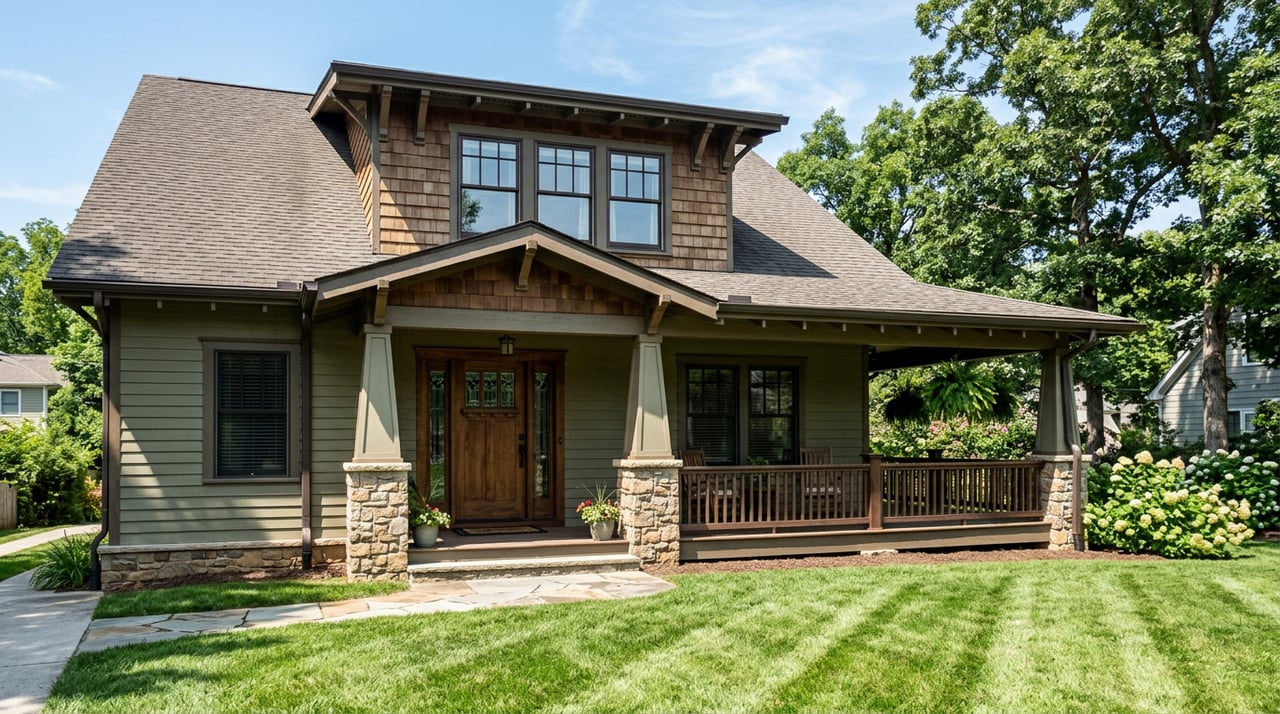
SunLand’s HOA Rules and Washington’s New Disclosure Requirements
September 3, 2026
September 3, 2026
Ask a SunLand seller from a few years back what the resale certificate involved, and most will tell you it was paperwork the title company handled quietly in the background. It showed up in the closing packet, got a glance, and rarely caused a delay. Ask someone selling in SunLand this year, and the answer is different. On January 1, 2026, Washington pulled decades-old homeowners associations into a stricter disclosure standard, and it landed on top of a community that has spent more than sixty years building an unusually detailed paper trail on every house inside it.
That combination is the thing worth understanding before you list or make an offer here, not after.
Washington has been rewriting the rules for homeowners associations and condos since 2018, but the changes used to move slowly and mostly touched newer communities. In 2024, the legislature passed a law nicknamed "WUCIOA for All," which set a firm date, January 1, 2028, when every community association in the state, regardless of when it was formed, will operate under one unified statute known as WUCIOA, short for the Washington Uniform Common Interest Ownership Act.
SunLand's golf club, the hub the residential community grew up around, dates to 1963, decades before any of this existed, which put a community that old in the category that had breathing room until 2028.
Then, in 2025, according to CommunityPay, the legislature passed a second bill that shortened that runway. It pulled a specific list of governance, meeting, and financial provisions forward to January 1, 2026, and applied them to every association in the state immediately, whether the community was formed last year or during the Kennedy administration. According to RunHOA, that list includes board meeting procedures and owner comment periods, emergency powers, budget and reserve disclosure, and, specifically, how associations are allowed to treat electric vehicle chargers and heat pumps.
That last item matters more in SunLand than it might in most Sequim neighborhoods, and we'll get to why.
Once a community is fully operating under the unified statute, the law is specific about what a resale certificate has to include and how fast it has to arrive. The certificate has to be delivered within 10 days of a request, the association can charge no more than $275 to prepare it and $100 for an update within six months, and the buyer gets a 5-day window to cancel the purchase contract after first receiving it. The certificate itself has to cover 26 separate disclosure items, and 11 of those can't be pulled automatically from a ledger. They require the board to affirmatively confirm facts: pending litigation, unresolved violations, warranty status, and use restrictions.
Here's how the standard shifts once a community is fully under the new framework, compared with what many older associations, including SunLand's, have historically treated as informal practice:
| Before full transition | Under the unified standard | |
|---|---|---|
| Certificate fee | Varied by association | Capped at $275 initial, $100 for updates |
| Delivery timeline | 10 days from request | |
| Buyer's right to cancel | 5 days after receiving the certificate | |
| Disclosure detail | General financial summary | 26 statutory items, 11 requiring board confirmation |
SunLand isn't required to hit every one of these marks yet. Its board still operates primarily under Washington's older Homeowners' Association Act, and the full resale certificate standard doesn't become mandatory until 2028. But the accelerated provisions that took effect this January already touch board process and the specific handling of heat pumps and EV chargers, and boards that haven't updated how they document decisions are going to feel the gap the closer 2028 gets. For a seller, the practical takeaway is simple: don't assume the certificate you get this year looks like the one a friend got in 2022.
Here's the part that makes this more than a statewide compliance story. SunLand's Architectural Committee has, for decades, required prior written approval before an owner does almost anything to the outside of a house. The list isn't limited to additions and major remodels. According to the SunLand Owners Association's own governing rules, approval is required before exterior painting "even if same color," before a roofing change "even if same type and color," before installing or relocating a propane tank, before building or relocating a shed or greenhouse, before adding or revising a deck, and before removing any tree over 20 feet tall.
Fences carry their own set of specifics. The SunLand Owners Association says no fence can exceed 6 feet, chain link has to be black or dark green, and nothing can be placed within 20 feet of the golf course boundary, where the limit drops to 4 feet. Heat pumps need committee sign-off on placement, with the committee weighing both appearance and noise to neighboring lots. The SunLand Owners Association caps overnight parking at four vehicles per residence, and boats, RVs, and campers have to live in a garage or the community's dedicated RV lot rather than a driveway.
None of this is unusual for SunLand, where dues run just $350 a year and water and sewer combined sit around $116.67 a month, low by Peninsula standards. The tradeoff for that low cost has always been a board that reviews exterior changes closely and keeps records of it.
That review history is exactly the kind of thing the new disclosure rules are designed to surface through the resale certificate’s violations section. A fence installed without sign-off five years ago, a heat pump moved without approval, an old propane tank swap that never got documented properly: these are the details a thorough board now has to confirm one way or the other before the certificate goes out.
Reach out to the SunLand Owners Association well before you plan to list, not after you're under contract. Ask what your property's Architectural Committee file actually shows, and resolve anything open now rather than letting a buyer's attorney find it. If you've made any exterior change over the years, even one that felt minor at the time, confirm it was approved and that the approval is on file.
Read the certificate when it arrives instead of treating it as a formality. A blank field or an "N/A" next to violations or litigation isn't the same as confirmation that nothing exists. Use your 5-day right to cancel as real leverage if something in the paperwork raises a question you can't get answered before closing. And if you're planning your own exterior project once you own the house, budget time for the same Architectural Committee process the seller lived under. It doesn't disappear when the title changes hands.
Does this only apply to condos, or does it touch a single-family HOA like SunLand too? It applies broadly. The 2026 acceleration named board meetings, owner comment periods, emergency powers, and the handling of heat pumps and EV chargers as provisions that now apply to every association in the state, condo or not, regardless of when it was formed.
Is SunLand required to issue the full WUCIOA-style resale certificate right now? Not yet in every respect. The complete switch to the unified statute is mandatory by January 1, 2028. What changed this January is a specific set of governance and disclosure provisions that apply ahead of that deadline, which is why the paperwork is already shifting even though the full transition hasn't landed.
What should I actually do differently if I'm listing this year? Give yourself more lead time than you would have a few years ago. Contact the association early, ask about any open Architectural Committee items on your property, and don't assume the certificate will be ready the moment you decide to list.
This is general information based on Washington's current statutory framework and shouldn't be treated as legal advice. If a specific disclosure or violation question comes up on your property, a real estate attorney or your title company can speak to the details that apply to your transaction.
If you're weighing a sale or purchase in SunLand and want someone who already knows where the paperwork tends to get complicated, Trisha J Cobb and Shawnna Rigg have been walking Sequim buyers and sellers through exactly this kind of local detail for years. Let's Connect.
Stay up to date on the latest real estate trends.


With decades of combined experience and strong community connections, our team helps buyers and sellers move forward with confidence. Trisha Cobb & Shawnna Rigg are committed to providing attentive service, honest communication, and local expertise throughout every stage of the real estate process.