Jamestown Beach Is Closed to Shellfish Again. Everything Else Isn't.
September 17, 2026
September 17, 2026
The dog walkers who use the lot off Jamestown Road every morning already know the sign. It went up in July, posted at the beach access point the way these notices always are. If you've been avoiding the beach since summer because you assumed the whole place was off limits, you've been giving up your morning walk for nothing.
Clallam County closed Dungeness Bay to recreational shellfish harvesting on July 9, 2026, and Discovery Bay followed the next day. The cause was paralytic shellfish poisoning, a biotoxin produced by a marine plankton called Alexandrium that shows up in lab samples long before anyone walking the beach would notice anything wrong. The most recent county status listing we could find still showed Dungeness Bay closed to all species, with no reopening date attached, which is worth knowing before you head out with a bucket. That's not unusual. PSP closures on this stretch of the Strait can run for weeks or, in a bad year, months.
What's unusual is how many people read that closure as a closure of the beach itself. It isn't. It's a closure of one specific activity, and understanding exactly which one changes how you use Jamestown Beach for the rest of the season.
"All species" sounds absolute, and for shellfish, it is. The county's language covers clams, including geoduck, oysters, mussels, and other invertebrates like moon snail. Scallops are closed for sport harvest everywhere in the affected zone. If you're the kind of person who digs a bucket of littlenecks at low tide, that's paused.
Crab is a different animal, literally and legally. PSP toxin doesn't concentrate in crab meat the way it does in a clam's body, so crabbing is unaffected by this closure. The guidance from the county is simply to clean your crab thoroughly and discard the guts, since that's where any residual toxin could sit. Shrimp are unaffected too. If your beach routine at Jamestown includes dropping a pot off the point, you're still in business, just working from a different rulebook than the one governing clams a hundred feet away.
Here's the version that's easiest to keep straight:
| Still fine right now | Currently closed |
|---|---|
| Crabbing (with a valid catch record card and crab endorsement) | Clam harvest, including geoduck |
| Shrimping | Oyster harvest |
| Walking the beach, with or without a dog | Mussel harvest |
| Driftwood and agate hunting | Sport harvest of scallops |
| Birdwatching along the shoreline | Moon snail and other invertebrate harvest |
The distinction matters because Jamestown Beach was never primarily a clamming beach in the way Sequim Bay State Park or Dungeness Spit's east-side flats are. It's a walking beach first. The half-mile stretch of light sand between the Strait and the bluff draws people for the view of Mount Baker and the Olympics as much as anything you'd pull out of the sand, and none of that view changed on July 9.
If you've lived near Jamestown Beach long enough, you've probably noticed that shellfish closures here don't follow a single predictable calendar. That's because two separate systems are operating at once, and they rarely move in sync.
The commercial side of Dungeness Bay runs on a seasonal pattern set by water quality data going back to the late 1990s, when fecal coliform levels near the mouth of the Dungeness River first triggered a downgrade from the state's approved classification. The compromise that emerged, and still holds for the inner bay, opens commercial harvest from February through October and closes it from November through January, a seasonal buffer meant to protect public health during the wetter months when bacteria levels climb. Tidelands right at the river mouth stay closed year-round regardless of season, a holdover from persistent water quality concerns tied to the river and Meadowbrook Creek.
The recreational closure that's active right now has nothing to do with that calendar. PSP closures are triggered by lab results, not by the month, and they can hit in July just as easily as January. That's the version currently in effect at Jamestown Beach, and it will lift when Department of Health testing shows toxin levels have dropped, not when a date on a calendar arrives. The way to know for certain is the state's shellfish safety map or the Biotoxin Hotline at 1-800-562-5632, both of which get updated faster than word of mouth around the neighborhood.
Knowing the difference between these two systems is the kind of thing that turns "the beach is closed again" into "right, this is a PSP closure, it'll clear on its own timeline." One is bureaucratic and predictable. The other is biological and isn't.
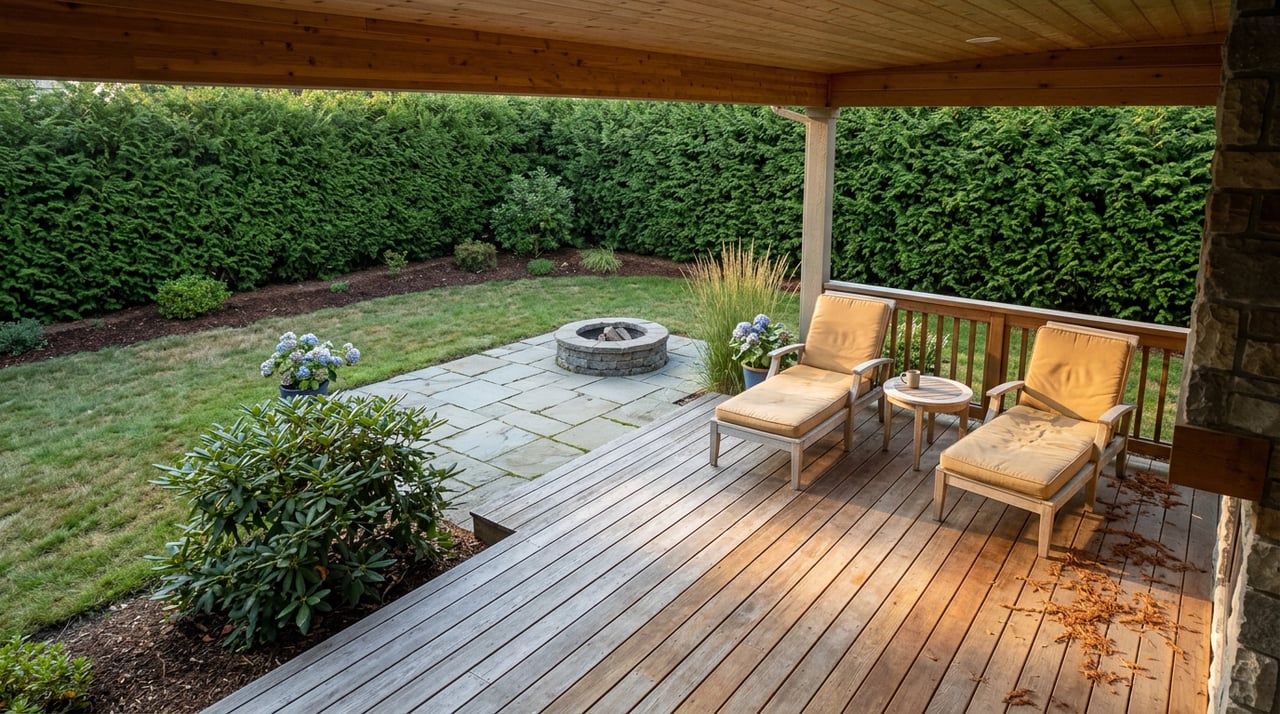
Walk the beach on a clear September morning and the things that make Jamestown Beach worth living near are all still there. The driftwood collects along the tideline the way it always has, and if you've spotted the larger sculptural pieces near the access point, someone's still adding to them. Agate hunters still work the gravel bands after a good tide. Shorebirds, ducks, and the occasional raptor still work the shoreline, same as any other September.
The Jamestown Crab Shack still sits north on Jamestown Road, a small building with a happy clam painted on the side that's become something of a local landmark. It was built by tribal elder Harris "Brick" Johnson, who used it for cooking crab he'd caught himself in the Strait and for hosting clam bakes that raised money for totem poles he carved and donated to Pioneer Park in Sequim and to Peninsula College in Port Angeles. The building isn't operating as a working kitchen the way it once did, but it's a piece of the beach's working history that has nothing to do with whether the tide is safe to dig today.
If you want seafood without worrying about biotoxin timing at all, the restaurants near the beach solve that problem for you. Commercial shellfish sold in stores and served in restaurants is tested for toxin before it ever reaches a plate, which is exactly why a recreational closure doesn't touch the menu at places like Oak Table Cafe for a cottage breakfast, Dockside Grill for waterfront seafood and steak, Salty Girls Seafood Co for oysters and cocktails, or Alder Wood Bistro for wood-fired plates in a garden setting. It's worth sitting with that gap for a second: the same oysters that are unsafe to dig yourself right now are perfectly safe on a plate a mile away, because they came through a supply chain with its own testing standard, separate from the one governing your bucket and shovel.
None of this means the closure doesn't matter. PSP is a real health risk, not a bureaucratic inconvenience, and the guidance to avoid harvesting during an active closure is worth following exactly as written. But a closure sign at a beach access point tells you about one activity, on one date, based on one lab result. It doesn't tell you the beach is off limits, and it doesn't erase everything else that makes Jamestown Beach worth the walk on a Tuesday morning in September.
If you're already living near the water here, you've probably built your own sense of when the bay opens and closes. If you're weighing whether a stretch of shoreline like this fits how you actually want to live, that's a longer conversation, and one Trisha Cobb and Shawnna Rigg have with buyers and sellers across Sequim and the Olympic Peninsula every week. If that's where you are, Let's Connect.
This article is general information, not legal, tax or financial advice. Consult a qualified professional about your situation.
Stay up to date on the latest real estate trends.
With decades of combined experience and strong community connections, our team helps buyers and sellers move forward with confidence. Trisha Cobb & Shawnna Rigg are committed to providing attentive service, honest communication, and local expertise throughout every stage of the real estate process.